Shreeya Garg Week 11: The Power of Books

Image Credits: https://quotefancy.com/quote/1044769/Paul-Auster-One-should-never-underestimate-the-power-of-books
Paul Auster once said that “One should never underestimate the power of books,” and yet in our current hightech society, books and the power that they harbor seem to be severely underestimated. However, books are vastly influential and contain immense power.
Firstly, books give us “access to the world’s best mentors” (The Humble Penny). People who write novels spend months, if not years, on their work. Since writing a book requires a lot of research, people who write books are experts on their topic. Information one receives from books is not only credible, but also life-changing. I think The Humble Penny captured this aspect of books well with this quote: “Reading is the best possible way to literally download someone else’s brains into yours” (The Humble Penny). There is no doubt that knowledge can transform one’s life, and books are the perfect medium to gain such thorough knowledge.
Another aspect of books that is highly impactful is that books allow readers “to have ‘conservations with the dead’” (Rudow). Biographies on people who have left this world, such as Martin Luther King Jr. or John F. Kenedy keeps the legacies of such influential people alive. These biographies enable the younger generation to learn from these leaders. Books like The Great Gatsby or Fever 1973 help connect readers to the past, and understand the culture and lifestyles of the past, in a way that would not be possible without such enriching novels. Books like these are immensely powerful because they educate readers about their past, which in turn can help readers gain a better understanding of their present society, and how they can change their world.
In addition to nonfiction and historical books, fictional novels are also very powerful, because they “have the power to change our perspective and mindsets. They can spark inspiration and be used as a guide to live our best life.” (Rudow). I couldn't agree more because so many popular fiction novels have important and positive messages. For example, The Little Prince teaches readers the importance of staying childish. Similarly, the Divergent trilogy inspires young women to be courageous and independent like Tris, and fight for what they believe in, no matter what.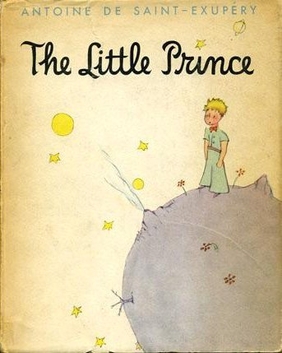
Although books generally have a positive influence, this isn’t always the case. For example, Hitler’s manifesto, Mein Kampf “promoted the key components of Nazism: rabid antisemitism, [and] a racist world view” (Holocaust Museum). This book was also powerful, and it successfully convinced many readers that Jewish people were “parasite[s]” (Britanica) and were responsible for Germany’s troubles. We all know what the horrendous impacts of this powerful novel were.
For good or for bad, books have a tremendous and undeniable influence on our world.
Sources:
https://thehumblepenny.com/5-reasons-why-reading-books-is-the-most-powerful-life-hack-ever
https://www.nls.uk/exhibitions/treasures/frederick-douglass/autobiography/
https://www.britannica.com/topic/Mein-Kampf
https://encyclopedia.ushmm.org/content/en/article/mein-kampf
https://quotefancy.com/quote/1044769/Paul-Auster-One-should-never-underestimate-the-power-of-books


Hello Shreeya, I liked reading your insight on the value on reading. The importance of reading is something that I debate all the time. At one end, I see what people say about reading containing years of work in 300 pages or so, and I listen to the very succesful people who say that reading is important. However, at the same time, I feel like although books have years of knowledge behind them, those years of information could be consumed even faster through video. Furthermore, the succesful people who praise reading so much were simply born in another age where reading was the only way to gain information. They never had the option to watch videos for knowledge, so after becoming succesful they do not attribute their success to video.
ReplyDeleteHi Shreeya! Although I used to not love reading when I was in elementary school, I started growing a passion for reading as I understood how the information that we attain from such sources can be so life-changing. The quote that you referenced saying, “Reading is the best possible way to literally download someone else’s brain into yours” was one that stood out to me because by interpreting various storylines that are provided to us when we are reading a novel or story, we are presented with a situational circumstance of which we can interpret into anything of our liking. I used to perceive fictional books as ones that do not hold much meaning to themselves; however, I soon realized that books themselves hold a lot of power in terms of being able to change our mindset to living a better life. As amazing as it sounds that books can have a powerful outlook, it is very saddening to realize that books can also have a detrimental effect if they come from an “overuse of power.” For instance, the reference you made Hitler’s manifesto, “Mein Kampf” is a great example of how Hitler used this approach to manipulate the mindsets of others, thus making them feel as if the Jewish people are “parasites” of themselves and a big reason for the problems that were arising in Germany. By gaining a better insight into the past and possibilities of how our future might look, the interrelation you drew between both faces truly inspired me to read more!
ReplyDeleteHi Shreeya! I used to love reading up until I acquired my video game addiction. I still have my collections of books with books that I was planning to read but I lost interest in reading before I got to them. Now, all I ever read is the required reading for English classes. I can rarely even bring myself to read manga for my own entertainment and whenever I try to read, I become really drowsy and I retain almost none of the information. However, I do agree that books are quite powerful and when I was younger my mom and teachers kept trying to convince me to read more non fiction so I could get actual content into my brain rather than unrealistic dystopian stories. I've always found the research that goes into a book fascinating especially for medical content like injuries and treating them, because that requires a lot of interviews with professionals etc.
ReplyDeleteHi Shreeya! I've always believed that reading books was beneficial, but never knew the specific ways that it improved the quality of someone's life. Despite this, I've barely read any novels on my own during my teens and the last time where I regularly read for fun was probably during elementary or middle school. I suppose it's more due to a combination of getting busier as I got older and using technology and the internet more. Nonetheless, it was cool to learn about the actual ways that books have a positive influence on people. Prior to reading this blog, the only beneficial aspect of reading that I had heard of was its ability to keep your brain sharp as you aged and serving as a preventive habit to diseases like Alzheimer's. Perhaps the self-made promise of reading more is something that a lot of us will make, but I know that I will likely fail to actually read more.
ReplyDeleteHi Shreeya, I used to be obsessed with books growing up, but unfortunately, I don't have a lot of time now to binge read different series. But, I'm trying to make more time. I definitely think people underestimate the impact that reading can have on the development of minds and character, especially with young kids. There are certain aspects of myself that have been heavily influenced by the books I read growing up. I also have knowledge of new vocabulary and better writing skills because of reading. This is definitely a great point to bring up when talking about language and power. I look forward to reading more from you!
ReplyDeleteBooks are what teach the younger generations lessons lost to memory and time. The ideas that books store are so essential for the newer generations, and the ideas and stories that they can deliver or teach are extremely powerful. Books can give the reader a window into the past, from history books that provide a comprehensive view of the past to the novel written in the 1850s that gives a reader a basic understanding of just how different life was then and just how much the world has changed in both technology and ideas. Books have almost limitless positive impact on the world and they have shaped the world for the better in so many ways. While certain examples of books like Mein Kampf and others are evidence of the possible negative effects of books, most books do nothing but good for the world.
ReplyDeleteHi Shreeya, books have been such a critical part of content I consume, whether it be the fantasy books I read as a child or the more discursive or argumentative pieces I read now. I used to read very extensively, and I remember having massive receipts of books that I've checked out from the library, but I've only recently re-entered that level of reading. While I haven't really been reading political or philosophical pieces, maybe I'll eventually start to in an attempt to broaden that horizon. Perhaps understanding all of these aspects of philosophy and politics would improve my own thought processes and lifestyle, so maybe I'll try one or two. Hopefully I continue to have time to read, as I really enjoy doing it, but we'll see how it goes.
ReplyDeleteHey Shreeya! Reading was the hobby that took up the majority of my time when I was younger. I sometimes am upset over how easy it is to give up reading a book for scrolling mindlessly through social media for that extra dopamine. My attention span was always pretty bad in the classroom but back then I could at least focus on reading! Literature is really amazing and can reach lessons along with enabling readers to think analytically and interpret what they read into what makes sense to them. In some fiction, a reader could empathize or see themself in a character which could make the experience more interesting for them. Books have been able to document knowledge for centuries before the rise of the Internet. But I can’t imagine myself looking through books and books and flipping through a ginormous encyclopedia for the answer to a question I could google now and get an answer for in just a few seconds. People take the internet for granted and I personally think it’s better for nonfiction. But fictitious literature will always be relevant and we must embrace its ability to teach us about the world around us.
ReplyDelete